
Choosing the Right PPE for Different Clinical Settings
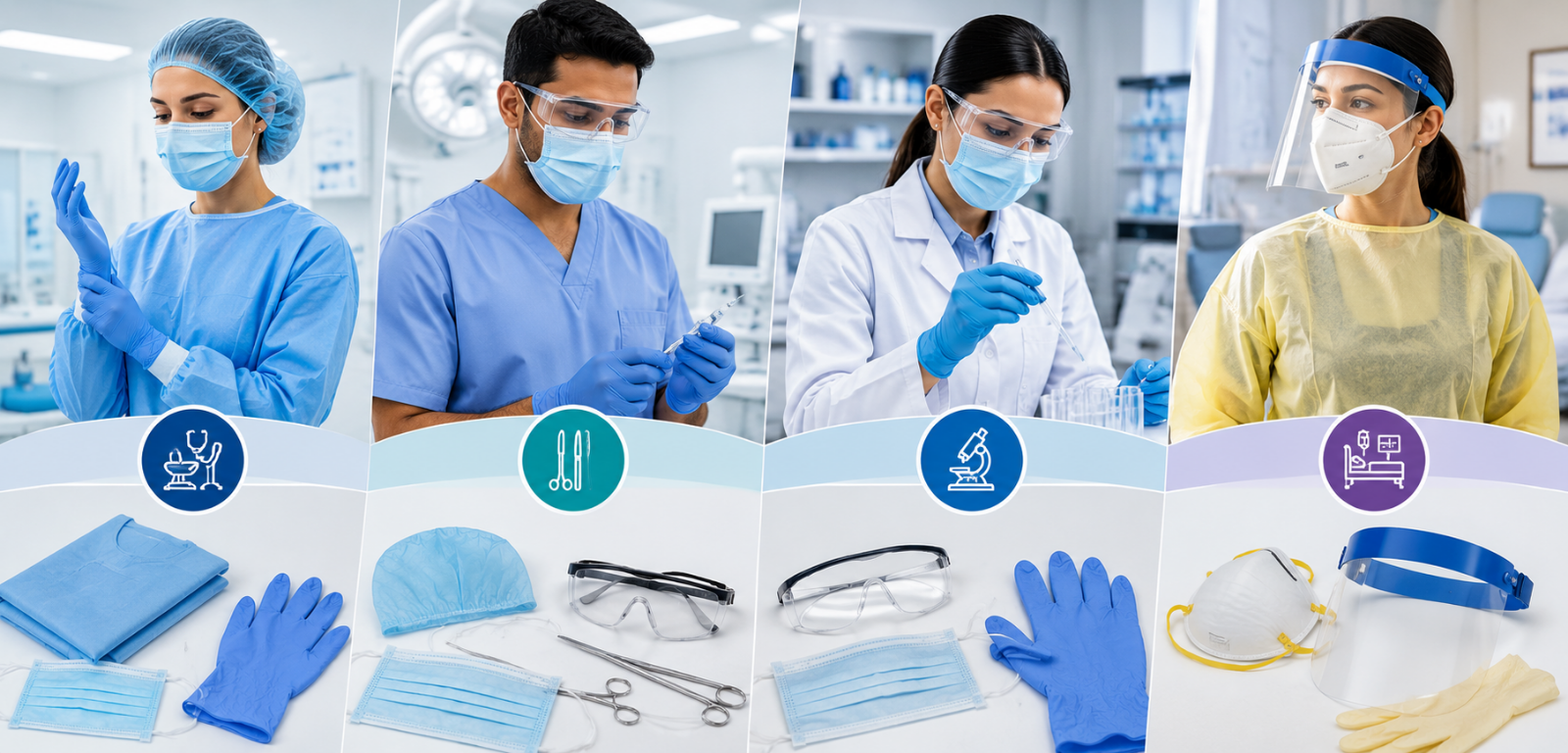
The commonly discussed PPE, or personal protective equipment, helps healthcare workers and patients block infectious substances, chemical agents, splashing liquids, aerosols, and other harm-causing risks that may arise in work settings. Simply put, this set of equipment acts as a safety barrier for all frontline medical staff and patients, isolating all types of injury-related risks that may be encountered in work.
However, PPE requirements vary across different clinical scenarios. The same set of protective equipment cannot be applied to all consultation rooms and wards; adjustments must be made based on the risks of the specific scenario. When medical institutions select protective equipment, they must make decisions based on the specific procedures to be performed, the estimated exposure risk, the probability of pathogen transmission, and the locally applicable infection prevention and control guidelines. If the selection is incorrect, it will either lead to insufficient protection and safety hazards, or cause unnecessary waste from over-protection.
Conduct a Clinical Risk Assessment before selecting PPE
Before choosing protective equipment, you cannot make a blind selection. The first priority is to investigate and assess whether the upcoming work may involve exposure to the following types of risks:
- Blood and bodily fluids
- Respiratory droplets or aerosols
- Patients with infectious diseases or contaminated object surfaces
- Hazardous chemicals or agents
- Sharp medical devices
- Laser or radiation risks
Only by clarifying all potential risks in advance can you select protective equipment that perfectly matches the needs.
The U.S. Centers for Disease Control and Prevention (CDC) stipulates that PPE must be used whenever there is a reasonable possibility of contact with potentially infectious substances, and this requirement is part of the CDC’s standard precautions. In other words, if you predict a high probability of encountering pathogens that may transmit infection, you must use personal protective equipment, which is a mandatory requirement in basic protection.
PPE for General Clinics and Outpatient Diagnosis and Treatment
Basic PPE is sufficient for daily routine consultations, unless there is a predicted risk of direct contact with blood, bodily fluids, damaged skin, or infectious substances. Routine procedures such as ordinary consultations and auscultation do not require complex protective equipment. Only when you anticipate exposure to the aforementioned high-risk substances in advance do you need to upgrade the corresponding protection level.
Common protective equipment includes:
The following are common basic protective equipment used in daily diagnosis and treatment scenarios:
- Single-use examination gloves
- Surgical masks or medical masks worn when applicable conditions are met
- Disposable aprons or isolation gowns
- Eye protection equipment must be used for procedures with splash risks
Two mandatory requirements must be followed when using gloves: a new pair of gloves must be used for each patient, and the same pair of gloves cannot be used to examine consecutive different patients; in addition, even if gloves are worn, hand hygiene must be performed before putting on gloves and after taking them off. The step of cleaning hands cannot be skipped just because gloves are worn.
PPE for Operating Rooms and Procedure Rooms
Next are the requirements for personal protective equipment used in operating rooms and procedure rooms:
When performing surgical operations and invasive procedures, sterile protective equipment must be used to maintain a sterile environment and protect the safety of the diagnosis and treatment team.
Common requirements include:
The following are essential protective items used when performing invasive procedures in operating rooms:
- Sterile surgical gloves
- Fluid-resistant surgical gowns
- Surgical masks
- Goggles or protective face shields
- Surgical caps
- Appropriate protective footwear
When selecting this protective equipment, the protection level must be matched appropriately to align with the estimated volume of liquids that may be contacted and the type of procedure to be performed.
PPE for Isolation Wards
Next is the personal protective equipment used in isolation wards, which corresponds to another type of scenario: if the patients cared for by healthcare workers need to be managed under contact transmission, droplet transmission, or airborne transmission prevention and control requirements, different combinations of personal protective equipment must be used.
These can include:
To prevent contact transmission, staff must be equipped with gloves and isolation gowns. To prevent droplet transmission, medical masks must be worn. For scenarios that involve specific airborne transmission risks, the Respiratory protection devices used must have passed a fit test in advance and must be paired with goggles or protective face shields. In some special situations, additional protective clothing must be worn.
For commonly known respiratory protection devices such as N95, not only must they pass a compliant fit test, but all staff who will use them must also receive specialized usage training. The selection of all personal protective equipment must be fully consistent with the confirmed pathogen transmission routes and the institution’s infection prevention and control policies, and cannot be chosen arbitrarily.
PPE for Dental Clinics
Dental clinics have specific personal protective equipment requirements tailored to their own scenarios. This is because daily dental procedures are highly prone to splashing droplets and liquids, and generate aerosols suspended in the air, with risks that differ from those of general outpatient departments. Corresponding equipment must be allocated based on the specific procedure to be performed and the results of a completed formal risk assessment. The equipment that may be used includes medical gloves, fluid-resistant masks or appropriate respiratory protection devices, goggles, full-face protective shields, fluid-resistant isolation gowns, and, when there are special needs, hair protection supplies and footwear protection supplies. It is worth noting that while protective face shields provide an extra layer of protection against splashing liquids, they cannot directly replace the role of masks or respiratory protection devices; the required masks must still be worn.
PPE for Clinical Laboratories
Clinical laboratories must also use personal protective equipment adapted to their scenarios. Staff in laboratories may regularly contact patients’ biological samples, hazardous chemicals, and sharp items such as needles, with risk points that are completely different from those of general diagnosis and treatment scenarios. Personal protective equipment suitable for laboratories includes laboratory work uniforms or protective isolation gowns, appropriate single-use gloves, goggles, protective face shields, respiratory protection supplies equipped for confirmed airborne transmission risks, as well as chemical-resistant gloves and aprons. Moreover, all gloves and protective clothing selected for laboratories must be fully compatible with the specific chemical or biological risks present in the scenario, and the wrong type of protection cannot be used.
PPE for Environmental Cleaning and Medical Waste
Finally, teams responsible for environmental cleaning and medical waste disposal also have specific personal protective equipment requirements. Staff in these positions will contact items contaminated by pathogens and various chemical agents used for cleaning during their work, and must be equipped with sufficient corresponding protective equipment before starting work.
Depending on the task, appropriate PPE may include:
General requirements for personal protective equipment include:
- Heavy-duty utility gloves
- Fluid-resistant aprons or gowns
- Masks or respirators where required
- Eye and face protection
- Closed, slip-resistant footwear
Ordinary single-use examination gloves mostly cannot withstand the puncture resistance and chemical corrosion resistance required for heavy-duty cleaning or medical waste disposal work, and cannot provide sufficient protection for these tasks.
PPE Purchasing, Training, and Maintenance
Before purchasing protective equipment, medical institutions must first verify the following:
- Product certifications and applicable standards
- Correct sizes and comfortable fit
- Fluid resistance and material compatibility
- Product integrity and expiry date
- Clear manufacturer instructions
- Reliable supply and traceability
Ill-fitting protective equipment will not only weaken the protective effect, but also hinder staff from safely completing clinical procedures and carrying out work smoothly. Staff must be trained on the Correct use of PPE: even high-quality PPE will not work if used incorrectly. Medical staff must learn how to select, put on, take off, discard, and replace protective equipment, and no link can go wrong.
Reusable PPE must be cleaned and disinfected in accordance with the manufacturer’s instructions, and cannot be handled arbitrarily. Institutions must also maintain sufficient inventory while preventing unnecessary misuse of equipment to avoid avoidable waste. A final reminder for PPE planning: to select the right protective equipment, a risk assessment-based approach must be adopted. Hospitals, clinics, dental clinics, laboratories, and isolation wards face different risks, so the required PPE combinations also vary, and a one-size-fits-all set of equipment cannot be applied universally.
When formulating PPE usage specifications, all institutions must comply with local regulations, product instructions, infection prevention and control policies, and the latest public health guidance, and must not set requirements that violate regulations.