
Gauze, Swabs & Adhesive Dressings
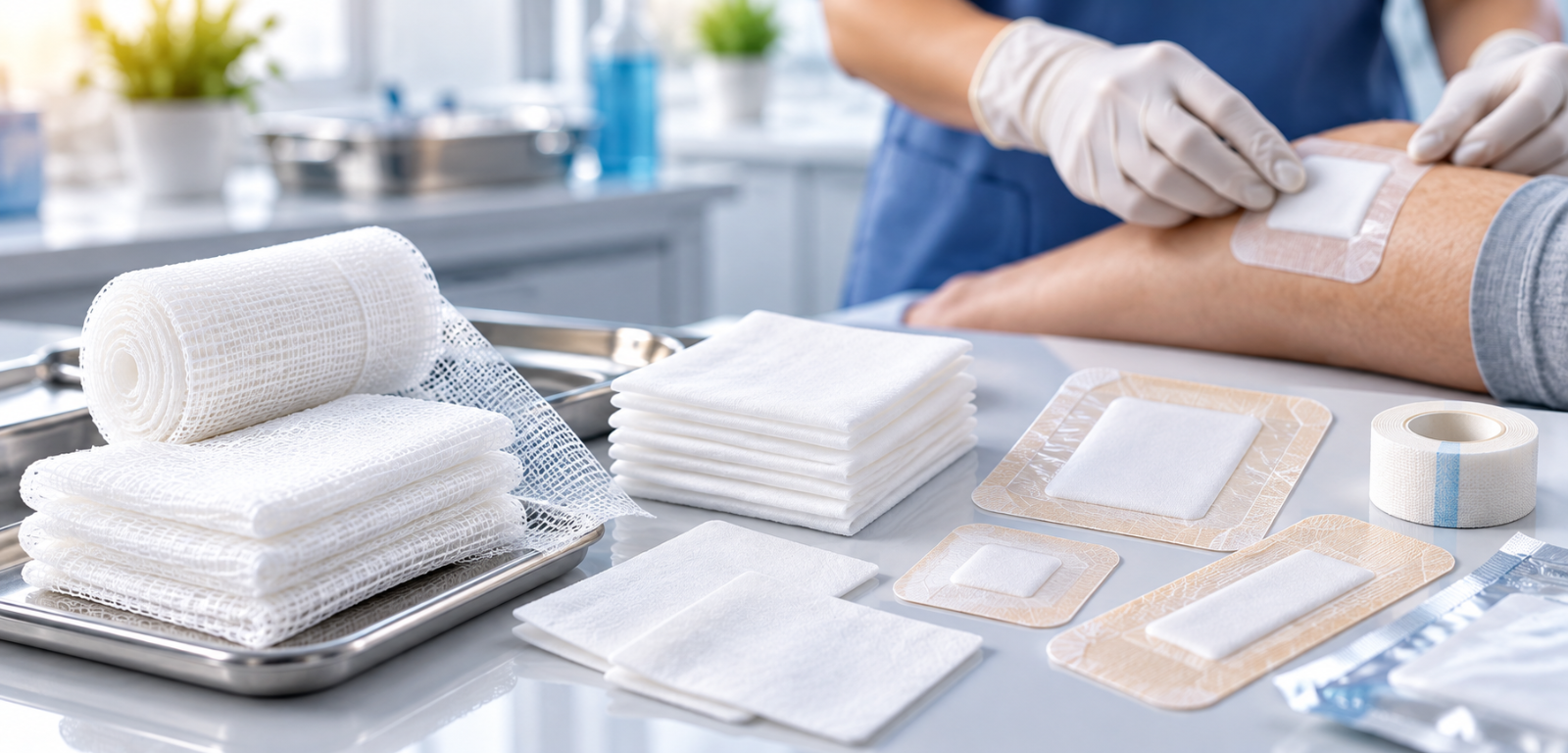
When to Use Gauze Swabs?
Gauze swabs are a consumable that can be used for a wide range of tasks, including cleansing and absorbing fluid from wounds. You can also apply direct pressure to a minor bleeding wound with a suitable sterile gauze.
Gauze can be used as an absorbent outer layer in a dressing system, over a suitable wound-contact layer. This might be useful when the dressing needs to be fixed separately with tape or a bandage.
But plain woven gauze can stick to a wound when fluid dries. This risk is identified in the manufacturer guidance, so gauze should not be assumed to be a non-adherent dressing. www.molnlycke.com
When Gauze May Not Be the Best Choice
Non-adherent contact layers are intended for wounds that require gentle repeated dressing changes and may be a better option than plain gauze in contact with the wound.
This is an important difference because removing an attached dressing may interfere with the healing tissue. Select the wound contact product based on the wound assessment and the manufacturer’s directions.
When to Use Nonwoven Swabs
Non-woven swabs are made from bonded fibres, not woven threads. Depending on the construction, they can offer a soft, absorbent option for cleaning and fluid handling.
Products appropriate for:
- Mild wash wound.
- Clean the skin in the area.
- Fluid absorption during care.
- Application of a secondary absorbent layer over a suitable contact dressing.
For example, the producer of Mesoft non-woven swabs lists cleaning, protection and absorption as intended uses. It also describes use as a secondary dressing over a primary wound contact layer.
Non-Woven Isn't Non-Stick
A soft texture does not ensure that a swab will come away easily from a drying wound. Certain nonwoven swabs also can bond to healing tissue.
Verify that the product is designed to be non-adherent. If you are choosing a dressing that will stay on the wound, don’t just look for the words ‘non-woven’.
When to Use Adhesive Band-aids
A simple adhesive wound dressing consists of a protective pad and a border that adheres to unbroken skin surrounding the wound. This is handy for appropriate small cuts and grazes once the bleeding has stopped and the wound has been cleaned.
The sticky border keeps the central pad in place to cover the wound. For most simple cuts, grazes and small wounds, HSE guidance suggests plasters and dressings as options.
Choose a pad that is large enough to completely cover the wound, with the adhesive on the healthy skin surrounding the wound, not on the wound itself.
When a Basic Adhesive Dressing Might Not Be Suitable
A normal plaster may not be able to absorb enough for a wound that produces a lot of fluid. If the surrounding skin is fragile, irritated or sensitive to the adhesive, you may also need to consider adhesive fixation.
A wound that is deeper, suspected to be infected, or repeatedly soaks through its dressing needs assessment rather than just a bigger plaster.
Furthermore, don’t assume any adhesive dressings are waterproof. Check the product’s claimed properties and directions.
Why You Should Choose Elumia Med Store?
Elumia Med Store is an online catalogue of medical equipment and consumables, delivered across the UAE, for healthcare buyers looking to source wound care supplies.
The catalogue includes gauze sponges, adhesive plaster products and other supplies used in health care settings. Product listings include details such as size, ply or pack quantity where available so customers can also compare options before placing an order.
Check the exact product specification when purchasing, especially sterility, suitability for wound contact and dimensions. That helps your team order the supplies they need for their clinical needs.
Visit Elumia Med Store to see available products and confirm specifications and availability before making any purchase.
Conclusion.
The first step in deciding between gauze, non-woven swabs and adhesive dressings is to know what each does. Gauze and non-woven swabs may be useful for cleansing and absorption. Simple adhesive dressings provide easy coverage for appropriate minor wounds.
Material alone does not determine whether a product is sterile, non-adherent, waterproof or suitable for a particular type of wound. Double-check those things one at a time and seek professional advice when the condition of the wound calls for it.
Frequently Asked Questions
1. What is the difference between gauze swabs and non-woven swabs?
Woven gauze is made from interlaced threads, while non-woven swabs are made from bonded fibres. Products vary in softness, absorbency and shedding of fibres. Both are available in various specifications, so check the intended use and sterility.
2. Are non-woven swabs non-stick?
Not so much. Some nonwoven swabs can adhere as a wound dries. If you require a non-stick surface, opt for a product that is explicitly labelled as non-adherent and appropriate for the wound.
3. When to use an adhesive dressing instead of gauze
A simple adhesive dressing is well suited for a small, cleaned wound with controlled bleeding and limited drainage. Gauze can be used for cleansing, or it can be part of a dressing system that needs separate fixation.
4. Can you put non-sterile gauze on an open wound?
For planned wound care, use a sterile product for direct wound contact. Just because the gauze looks clean, you can't assume it is appropriate for use. In an emergency, the most important thing is to stop severe bleeding and get help quickly.
5. How often should I change a wound dressing?
Use as directed on the product and as part of any clinician’s plan of care. Change it earlier if it gets loose, contaminated, saturated, or unexpectedly wet. If the leakage occurs repeatedly or if the pain becomes worse, if redness or other changes occur, the wound should be re-examined.