
How PPE Protects Healthcare Professionals and Patients
What Is PPE in Healthcare?
Personal protective equipment, commonly known as PPE, refers to protective clothing and equipment used to help reduce exposure to hazards in healthcare environments.
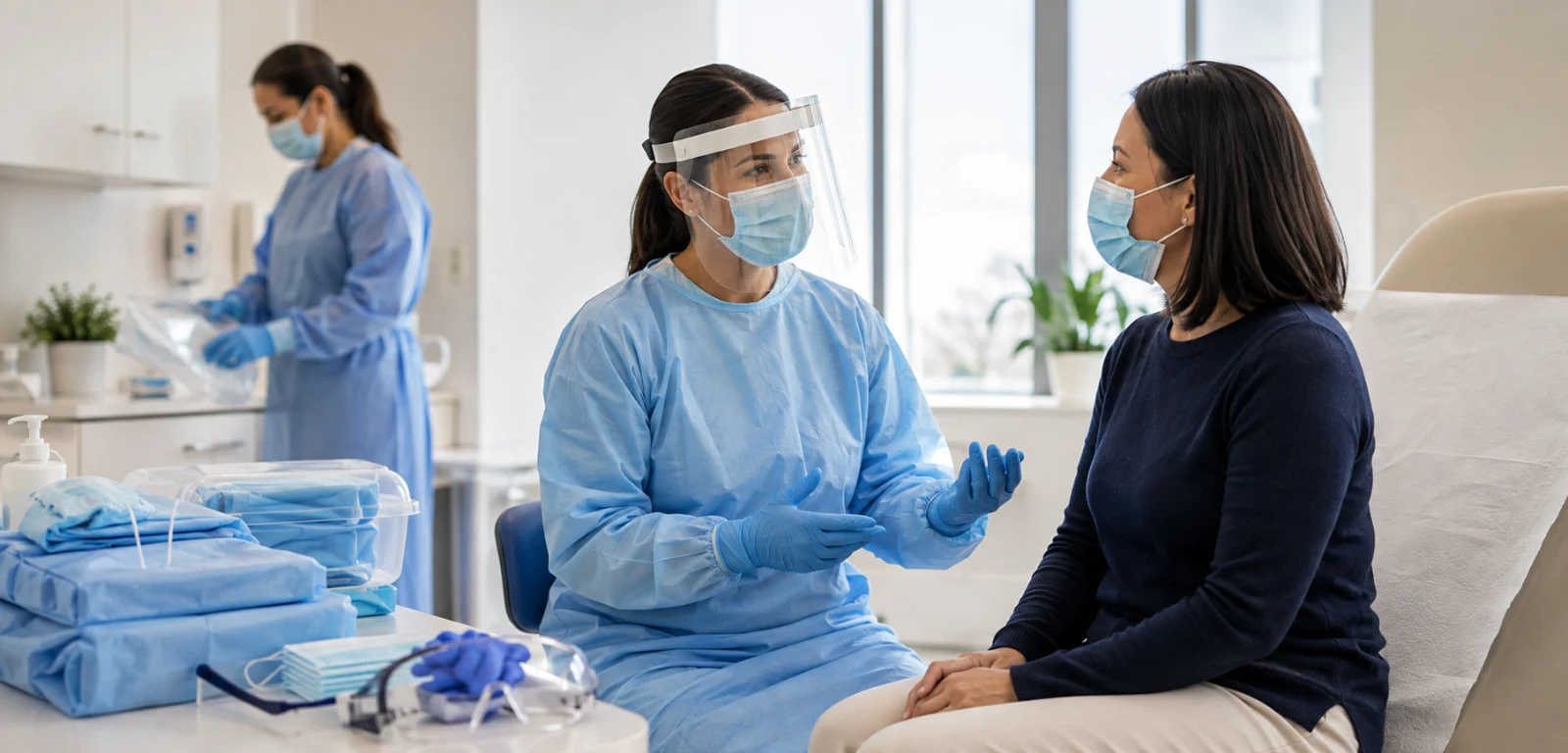
Common medical PPE includes medical gloves, face masks, protective gowns, eye protection, face shields, and other protective equipment. The type of PPE required depends on the procedure, potential exposure, and applicable infection-control guidelines.
Why Is PPE Important in Healthcare?
Healthcare professionals can come into contact with blood, body fluids, respiratory droplets, contaminated surfaces, and other potentially infectious materials during their work.
Using appropriate PPE can provide a physical barrier between healthcare workers and potential hazards. It can also help reduce the risk of transferring contaminants between people, equipment, and surfaces when used correctly as part of broader infection-prevention practices.
How PPE Protects Healthcare Professionals
1. Medical Gloves
Medical gloves provide a barrier between the hands and potentially contaminated materials. They are commonly used during examinations, procedures, wound care, and situations involving contact with body fluids.
Gloves should be selected and used according to the procedure and relevant infection-control requirements.
2. Face Masks and Respiratory Protection
Face masks and other respiratory protective equipment can help reduce exposure to respiratory particles and droplets, depending on the type of protection and the situation.
Healthcare facilities should select respiratory protection based on the anticipated risk and applicable guidelines.
3. Protective Gowns
Medical gowns can help protect clothing and skin from contamination during procedures where exposure to blood, body fluids, or other potentially infectious materials is possible.
4. Eye and Face Protection
Goggles and face shields can help protect the eyes and face from splashes and potentially infectious materials during procedures where such exposure may occur.
How PPE Helps Protect Patients
PPE is not only about protecting healthcare professionals. Appropriate use can also support infection prevention and patient safety.
For example, wearing appropriate gloves and protective clothing during procedures can help reduce the potential transfer of contaminants. Proper PPE practices are particularly important when caring for patients who may have infectious conditions.
However, PPE works as one component of infection prevention. Hand hygiene, environmental cleaning, sterilization, safe waste disposal, vaccination where appropriate, and other infection-control measures also play important roles.
Choosing the Right Medical PPE
Healthcare facilities should select PPE based on the type of procedure and anticipated exposure. Important considerations include:
- Type and level of protection required
- Correct size and fit
- Material and product specifications
- Comfort and mobility
- Sterility requirements where applicable
- Quality and durability
- Applicable healthcare and regulatory standards
Using the correct PPE for the situation is more important than simply using more protective equipment.
Proper PPE Use Is Essential
PPE provides its intended protection only when it is selected, worn, removed, and disposed of correctly. Healthcare workers should receive appropriate training on PPE procedures and follow their facility's infection-control policies.
PPE should also be stored properly and inspected for damage before use. Disposable PPE should be handled and discarded according to applicable healthcare waste-management requirements.