
How to Choose Skincare Products for Different Skin Concerns
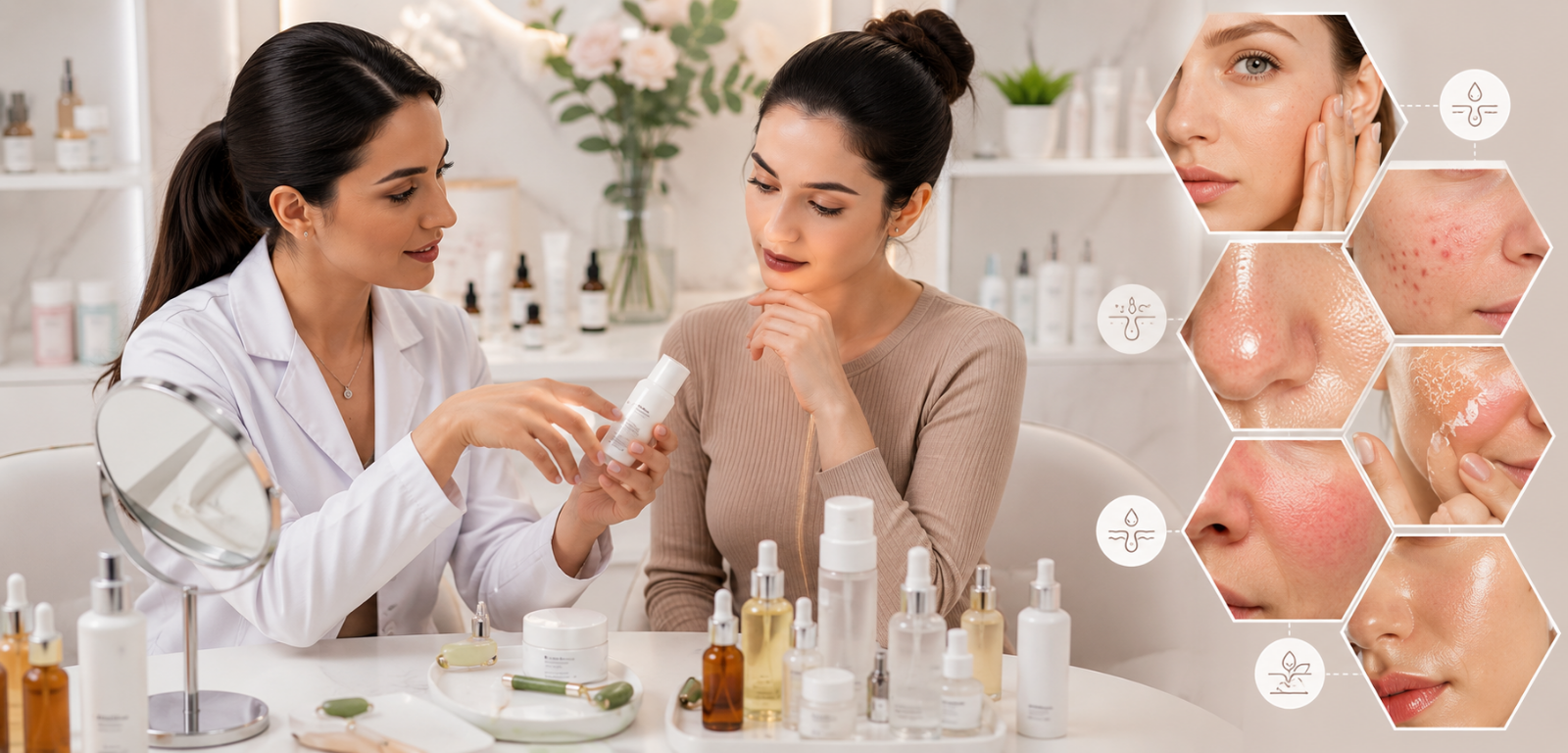
There are countless cleansers, serums, moisturizers, and various repair products available to buy today. When scrolling through live streams or recommendation posts, you will always encounter new skincare concepts and must-buy lists. It is extremely easy to get more and more confused while trying to pick skincare products that suit you, losing track of how to make the right choice. In fact, the core logic of selecting products is not complicated at all. You do not need to place orders following every viral skincare trend online, nor buy and test every product others praise. First, pause to clarify your main skin concern: do you struggle with frequent breakouts, persistent tight dryness, or increasingly noticeable faint spots on your face? Once you identify the core problem you want to solve most, you only need to pick products with the corresponding effective ingredients, instead of treating your face as a test field.
The following simple guide sorts out the product selection logic for different skin concerns clearly. Even beginners who have just started learning about skincare can understand it at a glance and follow it to make the right choice without mistakes.
Skincare Product Selection for Acne-Prone Skin
If your skin is prone to breakouts and you easily develop swollen closed comedones or pimples if you are not careful, non-comedogenic products with light textures that will not clog pores are the most suitable, as they will not add extra burden to your already stressed skin. When selecting products, you can prioritize those containing these ingredients:
- Salicylic acid: unclogs blocked pores and removes excess sebum and dead skin cells trapped inside pores
- Benzoyl peroxide: reduces bacteria that trigger acne, lowering the chance of breakouts at the source
- Niacinamide: controls excessive sebum production, reducing the risk of pore clogging
- Adapalene or other retinoid-like ingredients: supports normal metabolism and renewal of the skin around pores, preventing dead skin cells from accumulating and blocking pores
Be careful to avoid two common mistakes: first, do not use multiple powerful acne-fighting products at once, layering acne serums and acne creams all over your face; second, do not add grainy exfoliating scrub cleansers to your skincare routine. This will only excessively irritate your skin, fail to speed up acne healing, and even cause dryness, redness, stinging, and irritation. The American Academy of Dermatology lists salicylic acid, benzoyl peroxide, and adapalene as commonly used anti-acne ingredients. See AAD acne guidance
Skincare Product Selection for Dry, Dehydrated Skin
If your skin always feels dry and tight if you do not apply products immediately after washing your face, and even peels during seasonal transitions, you need products that replenish moisture and maintain the protective barrier on your skin's surface. They must fully hydrate your skin and lock in that moisture to prevent it from escaping. When selecting products, choose gentle cream-based cleansers and moisturizers that ideally contain these ingredients:
- Hyaluronic acid
- Ceramides
- Glycerin
- Squalane
- Shea butter
People with this skin type should avoid three things that damage the skin: do not buy heavily fragranced products loaded with artificial scents, do not use harsh soaps with strong cleansing power, and do not exfoliate frequently to add unnecessary burden to your skin. All of these will damage the already fragile skin barrier. Apply moisturizer while your skin is still slightly damp right after washing your face; this will help lock in moisture better, preventing your skin from drying out again quickly.
Skincare Product Selection for Oily Skin
For people with oily skin whose T-zone always shines, with their face becoming greasy enough to reflect light after half a day, you should choose oil-free, water-based products, or products with a light gel texture. These will not leave your face oily and greasy shortly after application. If a product contains Niacinamide and salicylic acid, it can also help improve excess sebum production and pore clogging, gradually stabilizing your skin's oil production.
Many people with oily skin skip moisturizer because they worry it will make their skin greasier, but this is actually a mistake. Even oily skin needs hydration and moisturization. Just choose light, non-comedogenic formulas that can supply your skin with the necessary moisture without feeling heavy, greasy, or sticky, adding no extra burden.
Skincare Product Selection for Skin With Dull Spots and Hyperpigmentation
If your skin has uneven tone, with hyperpigmentation such as sun spots or dark post-acne marks left by pimples, these are the common skincare ingredients used to improve these concerns:
- Vitamin C
- Niacinamide
- Azelaic acid
- α-Arbutin
- Retinoid-like ingredients
To improve spots and hyperpigmentation, applying sunscreen every day is a critical step that cannot be skipped, even on cloudy days. UV rays in sunlight, as well as daily visible light, will make existing spots darker and more noticeable, rendering any brightening and spot-fading products you have used ineffective. The American Academy of Dermatology recommends using broad-spectrum sunscreen with an SPF of 30 or higher, and notes that tinted sunscreens with iron oxide are very helpful for improving dark spots, as they can better block various types of light that worsen hyperpigmentation. See AAD pigmentation guidance
Skincare Product Selection for Sensitive Skin
If your skin is easily irritated and prone to redness and itching when you switch to a new product, you should choose products with simple ingredient lists, free of artificial fragrances, and with as few irritating substances as possible, to minimize skin stress. Look for products with soothing ingredients such as ceramides, colloidal oatmeal, panthenol, and centella asiatica; these ingredients help calm reactive sensitive skin and stabilize its condition.
Be especially careful when testing new products: only add one new skincare product to your routine at a time; do not introduce multiple untested products to your skin at once. Before full use, perform a patch test on a small area of skin behind your ear or on the inner side of your forearm. Wait one to two days to confirm no adverse reaction before applying it to your entire face, to minimize the risk of an allergic reaction. If you experience persistent burning, swelling, itching, or redness after using a product, do not insist on using it, assuming your skin is just adapting. Stop using it immediately, and remove that irritating product from your skincare routine right away.
Skincare Product Selection for Skin With Fine Lines and Aging Signs
If you notice dry lines starting to form on your face, your complexion becoming increasingly dull, and your skin no longer feels as firm as it used to, showing early signs of aging, you can choose products containing these ingredients to improve these aging signals:
- Retinol or other retinoid-like ingredients
- Peptides
- Vitamin C
- Hyaluronic acid
- Ceramides
When you first begin using retinol, gradually increase the usage amount: start with once a week, slowly increase the frequency of use, and do not use it daily from the start, as it may irritate your skin, causing redness and peeling. Sunscreen remains one of the most important products to prevent premature skin aging. Most skin aging is actually caused by UV; proper sun protection can block most damage that leads to fine lines.
Build a Simple Skincare Routine
Many people think skincare has to be complicated, that buying dozens of products to layer on your face means you are taking skincare seriously. In fact, a good skincare routine does not need many products. To start, you only need these core items, which are enough to address most skin concerns:
- A gentle cleanser, to simply wash away dust and excess oil from your face
- A treatment product targeted at your main skin concern, to specifically address the skin issue you want to improve most
- A suitable moisturizer, to hydrate your skin and lock in moisture
- A broad-spectrum sunscreen for daytime use before going out, to block UV rays and other harmful light that damages your skin
Active ingredients with treatment benefits should be added to your routine gradually; do not use all of them at once. Always follow the instructions that come with the product; do not arbitrarily increase the dosage or change the usage frequency. If you are pregnant or breastfeeding, consult a qualified healthcare provider before using retinol or other powerful active ingredients to confirm it is safe to use; do not risk your or your child's health.
Final Summary
There is no universally acclaimed one-size-fits-all skincare product. The best product for you will always be one that matches your skin concerns, your skin's tolerance, and your daily lifestyle; a product you can stick to and use comfortably is a good product. When selecting products, focus on clinically proven effective ingredients; do not buy flashy new concept products just to follow trends. Add new products slowly, test only one at a time, and keep using it consistently. Skincare never yields overnight results; it requires long-term persistence to see stable effects. If your acne, hyperpigmentation, redness, or irritation is severe, or does not improve over time, do not waste time testing products on your own. Consult a professional dermatologist to get customized, tailored advice to address your skin concerns specifically.