
Professional vs Consumer Skincare Products
What Are Professional Skincare Products?
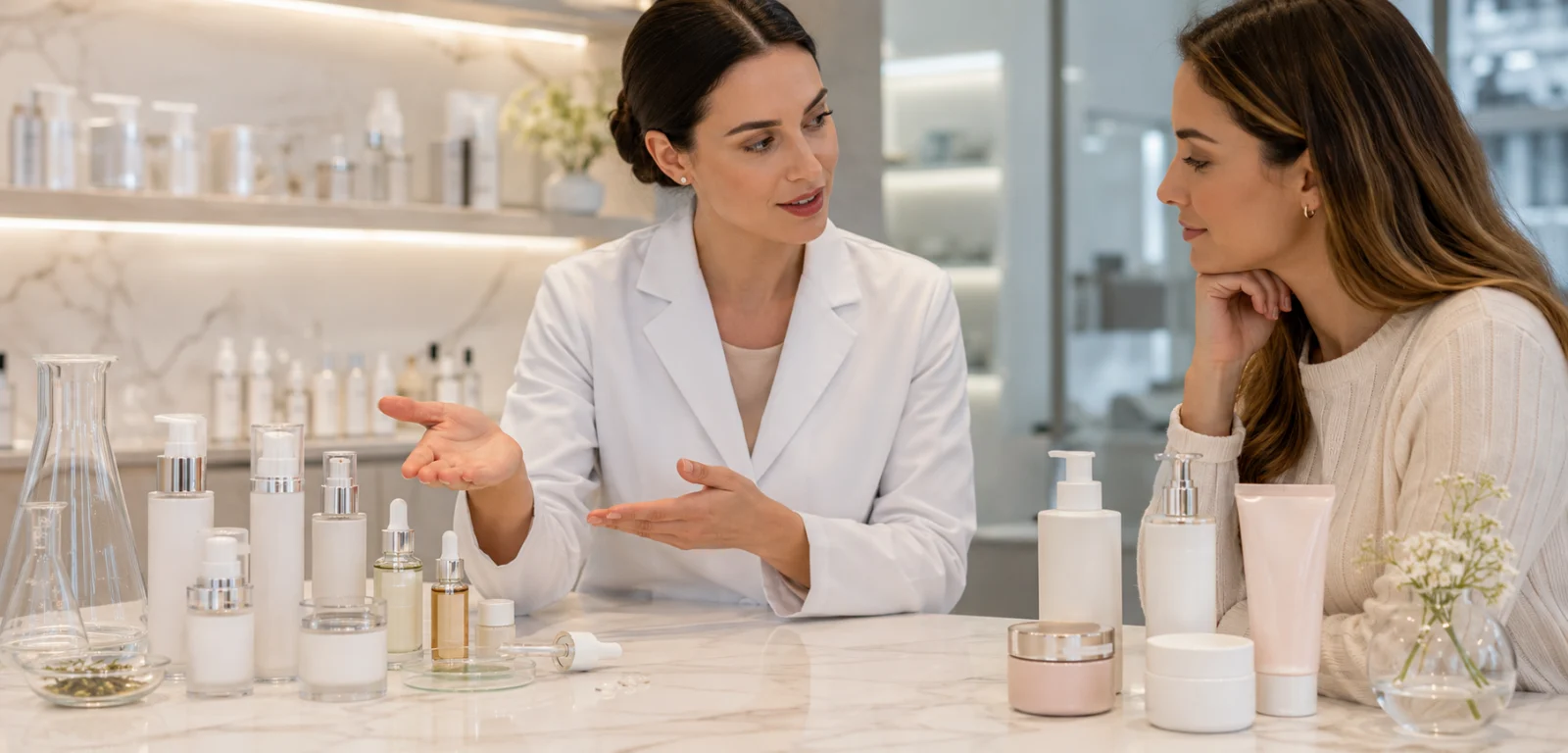
Professional skincare products are typically developed for use in dermatology clinics, aesthetic centers, medical spas, and professional skincare settings. They are often formulated to address specific skin concerns and may be recommended as part of a customized skincare plan.
These products can include advanced serums, exfoliators, chemical peels, professional masks, cleansers, moisturizers, and targeted treatment products. Depending on the formulation, some professional skincare products are intended for use by trained professionals, while others can be recommended for home use.
Professional skincare focuses more on targeted skin treatment, active ingredients, and customized skincare solutions rather than simply maintaining a basic daily routine.
What Are Consumer Skincare Products?
Consumer skincare products are designed for everyday personal use and are widely available through beauty stores, pharmacies, supermarkets, online retailers, and brand websites.
Popular consumer skincare products include facial cleansers, moisturizers, sunscreens, toners, face masks, exfoliators, and serums. These products are generally designed to be convenient, easy to apply, and suitable for regular skincare routines.
Consumer skincare offers options for different skin types, including oily, dry, combination, sensitive, and normal skin.
Professional vs Consumer Skincare: Key Differences
1. Product Formulation
Formulation is one of the major differences between professional and consumer skincare products. Professional products may be developed with more specialized formulations for particular skin concerns, while consumer products are often designed to meet broader everyday skincare needs.
This does not mean that every professional product is more effective. The suitability of a product depends on its ingredients, formulation, intended use, and the individual's skin.
2. Active Ingredients and Concentration
Professional skincare products may contain higher concentrations or more specialized combinations of active ingredients. These can include ingredients commonly used to target concerns such as uneven skin tone, acne-prone skin, texture, and visible signs of aging.
Consumer skincare products can also contain effective active ingredients, but they are generally formulated with regular home use and wider consumer accessibility in mind.
3. Professional Guidance
Another important difference is the level of professional guidance involved. Professional skincare products may be selected or recommended after evaluating an individual's skin condition and concerns.
With consumer skincare, users generally choose products themselves based on their skin type, personal preferences, product claims, and ingredient lists.
4. Targeted Skin Concerns
Professional skincare is often associated with targeted skincare treatments. Products may be incorporated into treatment plans for concerns such as acne, hyperpigmentation, uneven skin tone, rough texture, or visible signs of skin aging.
Consumer skincare can also support these concerns, but products are typically designed for a broader audience and everyday maintenance.
5. Application and Usage
Some professional skincare treatments require specific application techniques or professional supervision. For example, certain chemical peels or intensive exfoliation treatments may be unsuitable for unsupervised home use.
Consumer skincare products are generally designed to be applied easily as part of a daily or weekly routine.
6. Cost and Accessibility
Consumer skincare products are generally more accessible and available at different price points. Professional products and treatments may have a higher cost because of specialized formulations, professional expertise, treatment procedures, or clinical settings.
However, price alone does not determine skincare quality. A well-chosen consumer product can be an important part of an effective daily skincare routine.
Benefits of Professional Skincare Products
Professional skincare can offer several potential advantages when selected appropriately:
- More targeted product options
- Customized skincare recommendations
- Access to specialized formulations
- Professional assessment and guidance
- Treatment-focused approaches for specific concerns
- Integration with professional skincare procedures
Professional guidance can also help users understand how different products should be combined and how frequently they should be used.
Benefits of Consumer Skincare Products
Consumer skincare products remain a practical choice for everyday skin maintenance. Their key advantages include:
- Easy availability
- Convenient home application
- Wide variety of product options
- Different formulations for different skin types
- Options across various budgets
- Easy integration into daily skincare routines
For basic skincare needs, a simple routine involving cleansing, moisturizing, and sun protection can be a practical starting point.
Can Professional Skincare Products Be Used at Home?
Some professional skincare brands offer products specifically designed or recommended for home use. These may be incorporated into a routine following guidance from a qualified skincare professional.
However, not every professional product or treatment should be used without supervision. Products containing potent active ingredients or those designed specifically for professional procedures may require appropriate assessment and application.
Always follow the manufacturer's directions and seek qualified professional advice when you are unsure about a product's suitability.
Which Skincare Products Are Right for You?
Choosing between professional and consumer skincare products depends on your skin type, specific concerns, skincare goals, budget, and level of professional support required.
For everyday needs, consumer skincare products can provide convenient options for maintaining your skin. If you have persistent, complex, or changing skin concerns, speaking with a qualified dermatologist or skincare professional can help you understand which products or treatments may be appropriate.